Walking Tour, Bus Tour or Golf Cart Tour in Rome: Which Is Best for You?

Walking Tour, Bus Tour or Golf Cart Tour in Rome: Which Is Best for You?
October 26, 20266 min readGolf cart tours

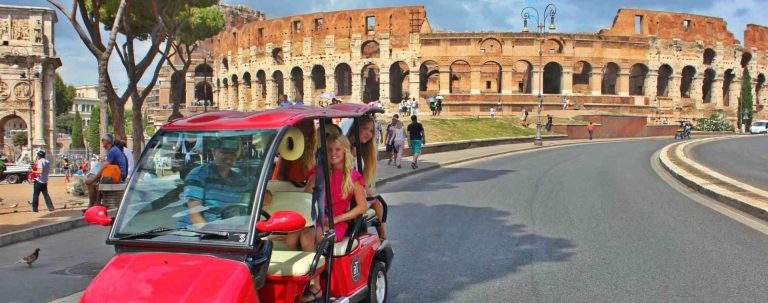
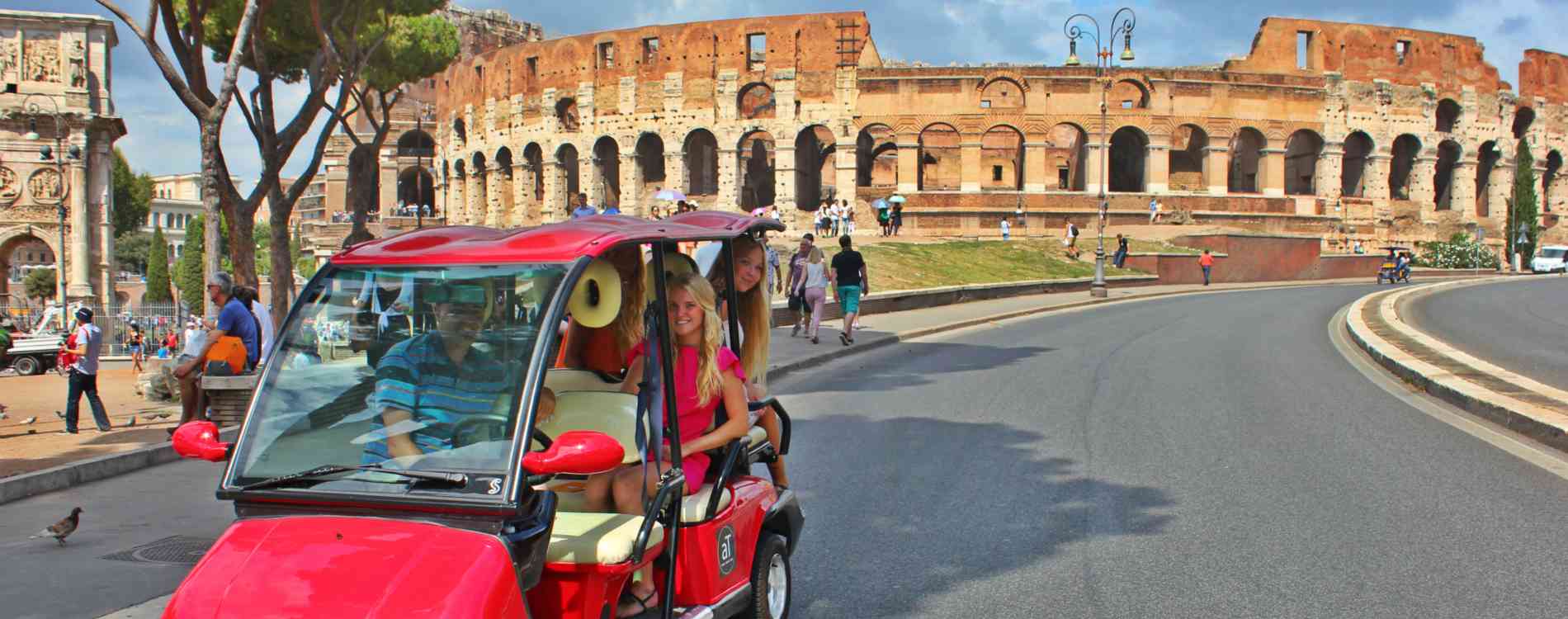
Golf cart tour passing the Colosseum in Rome

Rome rewards curiosity, but it is not an easy city to cover on foot. The historic centre is packed with sights, the streets are cobbled, and many of the best views sit at the top of a hill. So the question most visitors ask before their trip is a practical one: should you take a walking tour, a hop-on hop-off bus or a golf cart tour?

Each has real strengths. This guide, written by our local guides, compares them honestly on what matters most: how much you see, how much you walk, what it costs and who each one suits best.

The comparison at a glance

  • Walking tour: the most detail, one or two neighbourhoods, several kilometres on foot.
  • Hop-on hop-off bus: the cheapest overview, about €25–35 for a day ticket, recorded commentary, main roads only.
  • Golf cart tour: 20+ sights in 3 hours, a private guide, hotel pick-up and the narrow streets buses can’t reach.
  • Best combination: a golf cart overview first, then walking tours inside the Colosseum or the Vatican.

Walking, bus or golf cart: the short answer

If you want depth on one site, such as the Colosseum or the Vatican Museums, a walking tour is unbeatable, because those places are seen on foot anyway. If you are on a tight budget and want a flexible way to get around over a day or two, a hop-on hop-off bus does the job. If you want to see as much of Rome as possible in one go, including its narrow lanes and hilltop views, without tired legs, a golf cart tour is the most efficient and comfortable choice.

The three side by side

Walking tour Hop-on hop-off bus Golf cart tour
Ground covered in 3 hours One or two neighbourhoods A loop of the main avenues, around 8 stops 20+ sights across the historic centre
Walking Several kilometres Little on board, but every stop means walking to the sights Very little: short strolls at the stops
Narrow streets and hidden corners Yes No, main roads only Yes
Guide Live guide, usually a group Recorded audio commentary Your own private guide
Group Shared or private Shared bus Always private
Start A set meeting point Any bus stop Your hotel, if it’s in the centre
Heat and rain Fully exposed Open top deck Roof and rain covers
Price Usually the lowest-priced guided option About €25–35 for a day ticket From €100 per person, or €375 for 1–3 people
Best for History lovers and single sites Budget travellers, several days First visits, families, anyone short on time or energy

Prices for Rolling Rome private tours; bus prices are approximate.

Walking tours: the deepest dive

A good walking tour is the best way to understand a single place in depth. Inside the Colosseum, the Roman Forum or the Vatican Museums there is no alternative: you have to walk, and a guide brings the stones to life.

Pros: rich detail, time to look closely, often the lowest price for a live guide.
Cons: you cover only a small area, and Rome’s hills, heat and cobblestones can be tiring, especially in summer, with children or for anyone with mobility difficulties. Three hours on foot also leaves less energy for the rest of the day.

Piazza Navona in Rome, a highlight of walking and golf cart tours

Hop-on hop-off buses: the budget overview

The open-top buses follow a fixed loop around the city, with around eight stops near the major landmarks and recorded commentary in several languages. A day or 24-hour ticket costs roughly €25–35 per person, and you can get on and off as often as you like.

Pros: the cheapest way to get an overview, flexible over one to three days, a seat in between sights.
Cons: large buses cannot enter the historic centre, so the Trevi Fountain, the Pantheon and Piazza Navona are a walk from the nearest stop. Commentary is recorded rather than live, traffic can be slow, and you share the bus and the queues at each stop.

Golf cart tours: more Rome, less walking

A golf cart sits between the two. It is small enough to slip down the narrow lanes of the centre and climb to the viewpoints, but you sit comfortably between stops. On a Squares & Fountains tour you can see the Trevi Fountain, the Pantheon, Piazza Navona and the Spanish Steps in three hours; the Hills of Ancient Rome tour adds the Colosseum, the Circus Maximus and the famous Aventine keyhole.

Pros: 20+ sights in three hours, a private local guide, hotel pick-up in the centre, shade and rain covers, and a route you can adapt as you go.
Cons: it costs more than a bus ticket, and a sightseeing tour stops outside the ticketed sites. To go inside, combine it with a guided visit, as on our Rome in a Day + Colosseum tour.
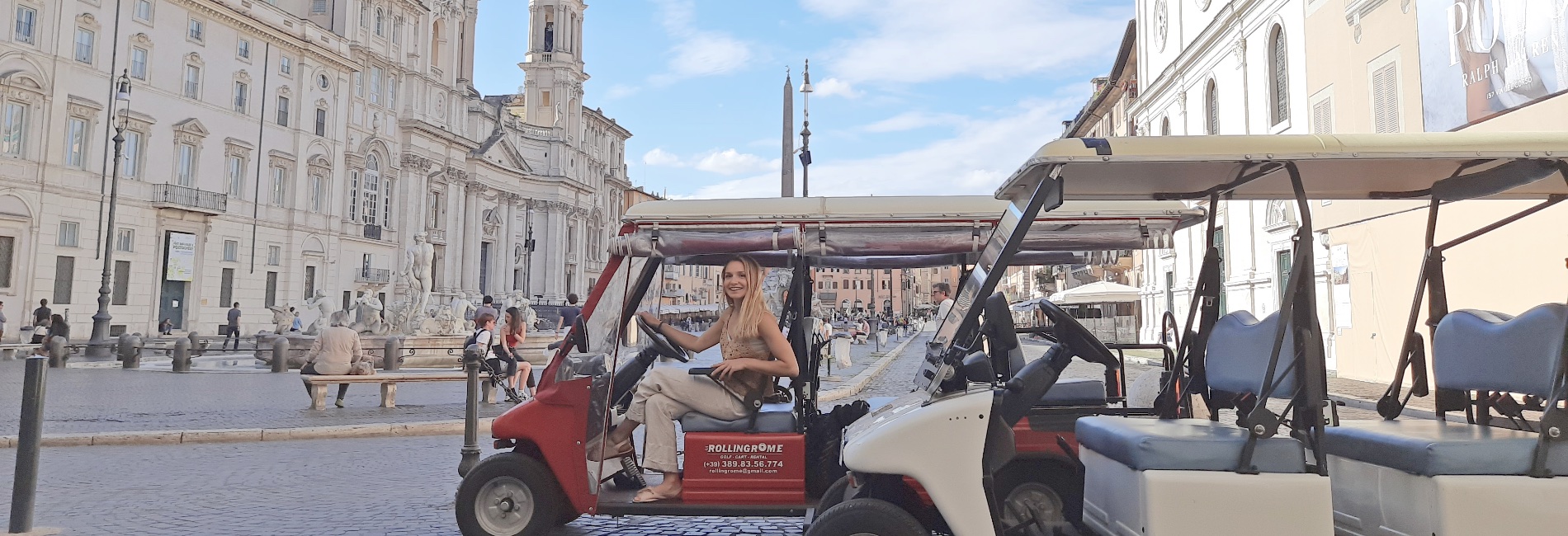
Golf carts parked in a Roman piazza during a private tour

Which tour is right for you?

  • First time in Rome, short on time: a golf cart tour gives you the whole picture in a morning, so you know where to return.
  • Travelling with children: golf carts win for younger kids; walking tours suit older children who love history.
  • Hot summer days: a golf cart in the morning or at sunset keeps you out of the midday heat.
  • Tight budget over several days: a hop-on hop-off ticket is hard to beat on price.
  • Ancient history in depth: a walking tour of the Colosseum and Forum, ideally after a golf cart overview of the city.

Can you combine them?

Yes, and many of our guests do. A popular plan is a golf cart tour on the first morning to get your bearings, then walking tours inside the Colosseum or the Vatican on the following days. If you want both in one go, Rome in a Day covers the whole centre with lunch in a trattoria, and can be combined with the Vatican Museums.

Frequently asked questions

Is a golf cart tour of Rome worth it?

For most first-time visitors, yes. In three hours you see more than 20 of Rome’s best-known sights, including the narrow streets buses cannot reach, without walking several kilometres. It costs more than a bus ticket, but you get a private guide and hotel pick-up.

How much walking is there on a golf cart tour?

Very little. You get out at the stops for photos and a closer look, usually for a few minutes and on flat ground, then the guide drives you to the next sight.

Can hop-on hop-off buses enter Rome’s historic centre?

No. Large buses stay on the main roads around the centre, so the Trevi Fountain, the Pantheon and Piazza Navona are a walk away from the nearest stop.

Which tour is best for a first visit to Rome?

A golf cart tour is a great introduction: it gives you an overview of the whole centre in a morning or afternoon, so you know what you want to see in depth later. Add a walking tour for the Colosseum or the Vatican, which you need to visit on foot anyway.

Which is better with children?

Children usually love the golf cart: short rides, lots of stops and no long walks. Walking tours suit older children who enjoy history, and buses are good for a rest between sights.

Do golf cart tours run in the rain?

Yes. Rolling Rome’s golf carts have roofs and rain covers, and the tours run rain or shine.

Last updated: October 2026. Prices for bus tickets are approximate and can change; check the operator’s website before you travel.

Rolling Rome local guideWritten by the Rolling Rome team
Local guides sharing the stories of Rome since 2013.

Keep reading

You may also like

Continue reading

Desserts in Rome

desserts in rome


Desserts in Rome: Iconic Sweets, Ancient Recipes & Must-Try Treats

December 21, 202515 min readFood & drink

Picture yourself on a Tuesday afternoon in Trastevere. The sun hits those ochre building facades just right, casting long shadows across cobblestones worn smooth by two thousand years of footsteps. You smell it before you see it—that unmistakable aroma of butter, sugar, and almonds wafting from a corner pasticceria. Inside, an elderly woman in a floral apron arranges maritozzi on silver trays while her grandson pulls espresso shots for the lunch crowd.

This is how Rome does dessert. Not as an afterthought, not as Instagram fodder, but as a daily practice that connects modern life to ancient ritual.

Rome’s relationship with sweets goes back further than you might imagine—back to when emperors feasted on honey cakes in marble halls, back to when priestesses baked offerings for temple gods. The desserts in rome today carry that history in every bite. They’re simpler than French pastries, less ornate than Viennese tortes, but they possess something those elaborate confections often lack: authenticity rooted in place and time.

This guide walks you through Rome’s dessert landscape, from the honey-soaked treats ancient Romans prepared to the pastries locals queue for each morning. You’ll discover which sweets define the city, where to find them, and why understanding rome desserts matters if you want to truly grasp what makes this place tick.

best desserts in rome

Desserts in Ancient Rome — Where It All Began

Before Europeans knew sugar existed, Romans had already figured out how to satisfy their sweet cravings. They worked with what their vast empire provided: honey from Attica, dates from North Africa, almonds from Sicily, and cheese from local herds. The desserts in ancient rome weren’t primitive—archeological evidence and historical texts reveal surprisingly sophisticated techniques.

Consider libum, the cheesecake that appears in Cato the Elder’s De Agri Cultura from 160 BCE. Romans made it with flour, ricotta-style cheese, one egg, and bay leaves, then drizzled it with honey. But libum wasn’t just food. Families baked these cakes specifically for household gods, placing them on altars during morning prayers. Newlyweds offered libum at temples. Festival days meant libum appeared on every table.

“Let the mortal man remember that he is mortal, and let the offering of libum remind the gods of their duties to us.” — Marcus Porcius Cato

The recipe survived because it mattered spiritually, not just gastronomically.

Ancient Roman sweets included:

  1. Placenta — layered pastry with cheese and honey (yes, that was actually the name)
  2. Dulcia domestica — dates stuffed with nuts, coated in honey, sometimes finished with a pinch of salt
  3. Globi — fried cheese balls rolled in honey and poppy seeds
  4. Savillum — a custard-like dessert made with cheese, flour, honey and eggs
  5. Scriblita — cheesecake flavored with bay leaves

Social class determined dessert access in ancient Rome. Wealthy patricians competed to serve the most impressive final course at their cena (dinner parties), sometimes featuring desserts from desserts from ancient rome that required rare ingredients shipped from distant provinces. Common Romans ate simpler sweets—honey-drizzled bread, roasted chestnuts, fresh fruit. Still, even street vendors sold fried dough dusted with honey, making sweetness accessible across economic lines.

The techniques matter here. Ancient Romans understood fermentation, temperature control, and flavor balancing. They reduced grape must into a syrup called defrutum, which sweetened dishes when honey was scarce. They imported spices—cinnamon, pepper, even silphium (now extinct)—to create complex flavor profiles. These weren’t crude approximations of dessert. They were refined creations that influenced every Mediterranean cuisine that followed.

Modern Roman pastry shops still echo these ancient foundations. The emphasis on cheese-based sweets, the preference for honey over heavy sugar, the combination of salt and sweet—these principles connect today’s cornetti to the placenta served at Trajan’s banquets.

desserts in ancient rome

Traditional Rome Desserts You Should Know

Roman desserts follow a different philosophy than what you’ll find in Milan or Naples. They’re restrained. Ingredients speak for themselves without baroque decoration or excessive sweetness. Traditional rome desserts developed in home kitchens over centuries, passed from nonna to granddaughter, refined through repetition rather than innovation.

Maritozzi exemplify this approach perfectly. These soft, slightly sweet buns split down the middle and filled with whipped cream appeared in Roman bakeries during Lent as a “humble” treat (though calling anything filled with that much cream humble seems generous). Originally, young men gave maritozzi to their sweethearts on Friday mornings, sometimes hiding a gold ring inside the cream. The tradition faded, but the dessert remained.

Key characteristics of traditional Roman desserts:

  • Minimal ingredients — usually five components or fewer
  • Seasonal awareness — recipes change with what’s available
  • Practical portions — smaller than American servings, designed for daily enjoyment
  • Low sweetness — sugar enhances rather than dominates
  • Morning preference — Romans typically eat desserts with breakfast or mid-morning coffee

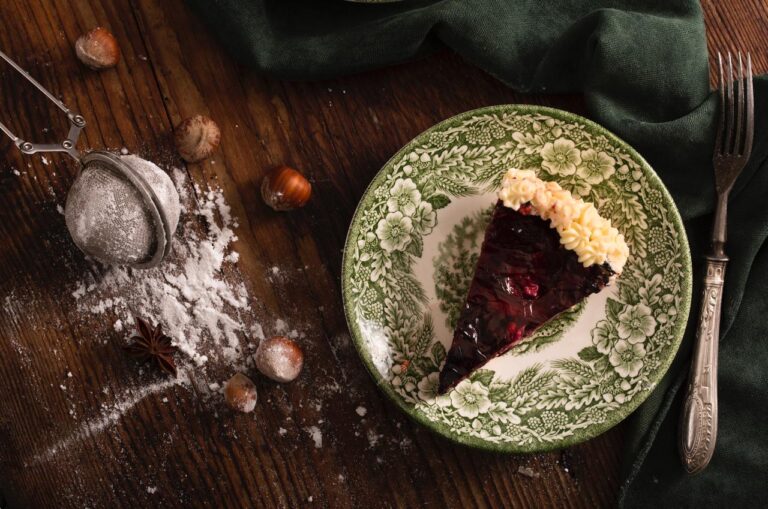
Crostata appears in every Roman home. This jam tart, made with pasta frolla (Italian shortcrust pastry) and filled with fruit preserves or ricotta, shows up at family dinners, christenings, and Sunday lunches. The lattice top is never perfectly even—that slight irregularity signals homemade authenticity. Romans favor visciole (sour cherry) or apricot jam, though ricotta-and-chocolate variations appear around Easter.

The desserts of rome differ noticeably from other Italian regions. Sicilian cassata involves marzipan, candied fruit, and sponge cake in elaborate layers. Neapolitan sfogliatella features dozens of crispy, paper-thin pastry sheets. Roman sweets skip the theatrics. They’re meant to complement coffee, not compete with it.

“Roman cuisine, including its sweets, is the cuisine of patience—not because it takes long to prepare, but because it took centuries to perfect simplicity.” — Ada Boni, Italian cookbook author

Romans eat dessert differently too. It’s not a grand finale after dinner. Most traditional rome desserts appear at breakfast (colazione) or during the late-morning coffee break around 11 AM. Afternoon tea isn’t a Roman concept. You might end a restaurant meal with a small sweet, but more often you’ll skip dessert entirely and grab a cornetto on your way to work the next morning.

This timing reflects Roman pragmatism. Why serve heavy desserts when you’re already satisfied from three dinner courses? Better to start tomorrow with something sweet that pairs with cappuccino. That forward-thinking approach—ending today by anticipating tomorrow—feels very Roman.

Famous Desserts in Rome — Iconic Sweets Loved by Locals

Some sweets transcend their ingredients to become symbols of place. These famous desserts in rome carry cultural weight beyond their calories, representing Roman identity in ways that pasta carbonara represents Roman cooking.

Gelato (The Roman Way)

Every Italian city claims superior gelato, but Rome approaches it distinctively. Roman gelato makers use less air in their product (known as overrun in industry terms), which results in a denser, silkier texture and more concentrated flavor. This restraint is intentional. Roman gelato is designed to taste honest—clean, balanced, and never cloying.

Traditional flavors dominate the Roman scene. Fiordilatte highlights the quality of fresh milk, pistacchio reveals whether real nuts are used, and nocciola showcases natural sweetness without excess sugar. You’ll rarely see flashy combinations or artificial colors in respected Roman gelaterias. Instead, the focus stays on ingredient sourcing and precision.

Gelato earns its place among famous Rome desserts not because the city invented it, but because Romans perfected the philosophy of doing less with more. Lower sweetness allows flavors to unfold gradually, making gelato feel refreshing even after a long meal. It’s common for locals to enjoy it while walking—never rushed, always integrated into daily life.

Knowing how to spot good gelato matters. Look for metal tins with lids rather than towering, sculpted displays. That neon-green pistachio piled high in the window? Tourist bait. Authentic Roman gelato stays covered to preserve temperature and prevent oxidation. Colors should look muted and natural: pale beige for pistachio, soft cream for fiordilatte, deep but not glossy brown for chocolate.

For visitors who want context along with taste, gelato becomes even more rewarding when experienced as part of a curated food journey. On the Rolling Rome Food Tour, gelato isn’t treated as a standalone snack but as one chapter in Rome’s broader culinary story—linked to local traditions, seasonal habits, and the neighborhoods that define authentic Roman food culture.

Tiramisù (Adopted, Then Perfected)

Tiramisù originated in Veneto during the 1960s, but Romans embraced it so completely that many visitors assume it’s a Roman creation. The Roman version tends toward less sweetness, with espresso’s bitterness more pronounced against mascarpone cream. Some Roman restaurants add a shot of Sambuca or amaretto, though purists argue this masks rather than enhances.

What makes Roman tiramisù distinct:

  1. Stronger espresso (Roman coffee bars pull shots that could strip paint)
  2. Less sugar in the mascarpone mixture
  3. Savoiardi (ladyfingers) soaked briefly, maintaining structure
  4. Cocoa powder finish without chocolate shavings or garnishes

Best Desserts in Rome — What to Try First

Choosing among Rome’s sweet offerings depends on personal preference and timing. The best desserts in rome for you might differ from what your traveling companion craves. This practical breakdown helps match desserts to taste profiles.

For Cream Lovers

If you prefer rich, dairy-forward desserts:

  • Maritozzi con panna — soft bun with whipped cream (morning only)
  • Cornetto alla crema — croissant filled with custard
  • Millefoglie — puff pastry layers with cream
  • Tiramisù — coffee-soaked layers with mascarpone

For Chocolate Enthusiasts

Roman chocolate desserts lean toward dark, less-sweet varieties:

  • Torta caprese — flourless chocolate-almond cake
  • Profiteroles — cream puffs with chocolate sauce
  • Sacher torte — available at historic cafés with Viennese connections
  • Gelato al cioccolato fondente — dark chocolate gelato

For Those Who Prefer Lighter Sweets

Rome offers plenty of options that won’t leave you uncomfortably full:

  • Crostata di frutta — fruit tart with pastry cream
  • Panna cotta — cooked cream with berry sauce
  • Sorbetto — fruit sorbet (lemon is spectacular)
  • Biscotti — almond cookies for dunking in coffee

Seasonal Considerations

The best desserts rome offers change throughout the year. Certain treats appear only during specific seasons, tied to harvests, religious festivals, or weather patterns.

Spring (March-May):

  • Bignè di San Giuseppe (March 19th)
  • Colomba pasquale (Easter dove-shaped cake)
  • Strawberry gelato and granita

Summer (June-August):

  • Grattachecca (shaved ice with fruit syrup)
  • Watermelon gelato
  • Maritozzi (lighter fillings)

Fall (September-November):

  • Castagnaccio (chestnut flour cake)
  • Fig-based desserts
  • Grape must desserts

Winter (December-February):

  • Pangiallo (ancient Roman fruit-and-nut cake)
  • Panettone (Christmas)
  • Hot chocolate with whipped cream

First-time visitors should prioritize the desserts to try in rome that locals eat daily rather than special-occasion treats. Start with maritozzi at breakfast, grab gelato while walking from the Pantheon to Piazza Navona, and end an evening with tiramisù at a neighborhood trattoria. These experiences provide context for understanding Roman food culture.

One practical tip: Romans rarely eat multiple desserts in one sitting. They might have a cornetto at breakfast, gelato in the afternoon, and skip dessert after dinner. Pace yourself accordingly, or you’ll miss half the city’s offerings because you’re too full to continue.


Desserts in Rome — FAQ


Quick answers


What desserts is Rome known for?


Rome is known for maritozzi (sweet buns with whipped cream), gelato, tiramisù,
crostata (fruit tart), bignè di San Giuseppe (cream puffs), and torta della nonna
(custard pie with pine nuts). These desserts reflect ancient Roman influences—honey, nuts, and fresh cheese—
plus centuries of Italian pastry refinement. Roman sweets tend to highlight simple, high-quality ingredients
rather than heavy decoration.


What are the best desserts in Rome for first-time visitors?


Start with three classics: maritozzi for breakfast, gelato in the afternoon (try pistachio or fiordilatte),
and tiramisù after dinner. They cover different moments of the Roman day and give you a clear “baseline” taste of
local dessert culture. Once you’ve tried the classics, explore more regional or creative variations.


Are Roman desserts different from other Italian desserts?


Yes. Roman desserts typically lean simple and balanced, with fewer ingredients and a less sugary finish.
Compared to Sicily’s richer, more elaborate sweets, Rome often focuses on clean flavors, soft textures, and
everyday pastries that feel natural after a meal.


Which desserts come from ancient Rome?


Ancient Roman sweets were usually based on honey, nuts, fruit, and fresh cheese,
since sugar wasn’t part of everyday cooking. Modern Roman desserts aren’t direct replicas, but many still echo
the same idea: natural sweetness, simple ingredients, and flavors that don’t feel heavy.


What are the most popular desserts in Rome today?


Gelato is the everyday favorite, followed by pastries like maritozzi, classic crostata,
and a well-made tiramisù. These are easy to find across the city and are popular with both locals and
visitors because they feel casual, not overly formal.


When do Romans usually eat dessert?


Desserts are most common after lunch or dinner, while pastries (like maritozzi) are often a morning choice.
Gelato is flexible and can happen anytime—especially on warm days—making it a natural part of strolling around Rome.


Where can you find authentic desserts in Rome Italy?


Look for neighborhood bakeries, historic pastry shops, and small gelaterias that prioritize freshness.
A good sign is steady local foot traffic and a focused selection rather than an overly huge, touristy display.


Why are desserts in Rome usually not very sweet?


Roman desserts are designed to finish a meal comfortably, not overwhelm it. Using less sugar helps the real flavors
(cream, nuts, fruit, pastry, coffee) stand out, which matches broader Italian preferences for balance and ingredient quality.

Rolling Rome local guideWritten by the Rolling Rome team
Local guides sharing the stories of Rome since 2013.

Keep reading

You may also like

Continue reading

Winter Carnival In Rome

winter carnival rome

Carnival in Rome: A Celebration of Culture and Tradition

November 20, 202519 min readRome sights & tips

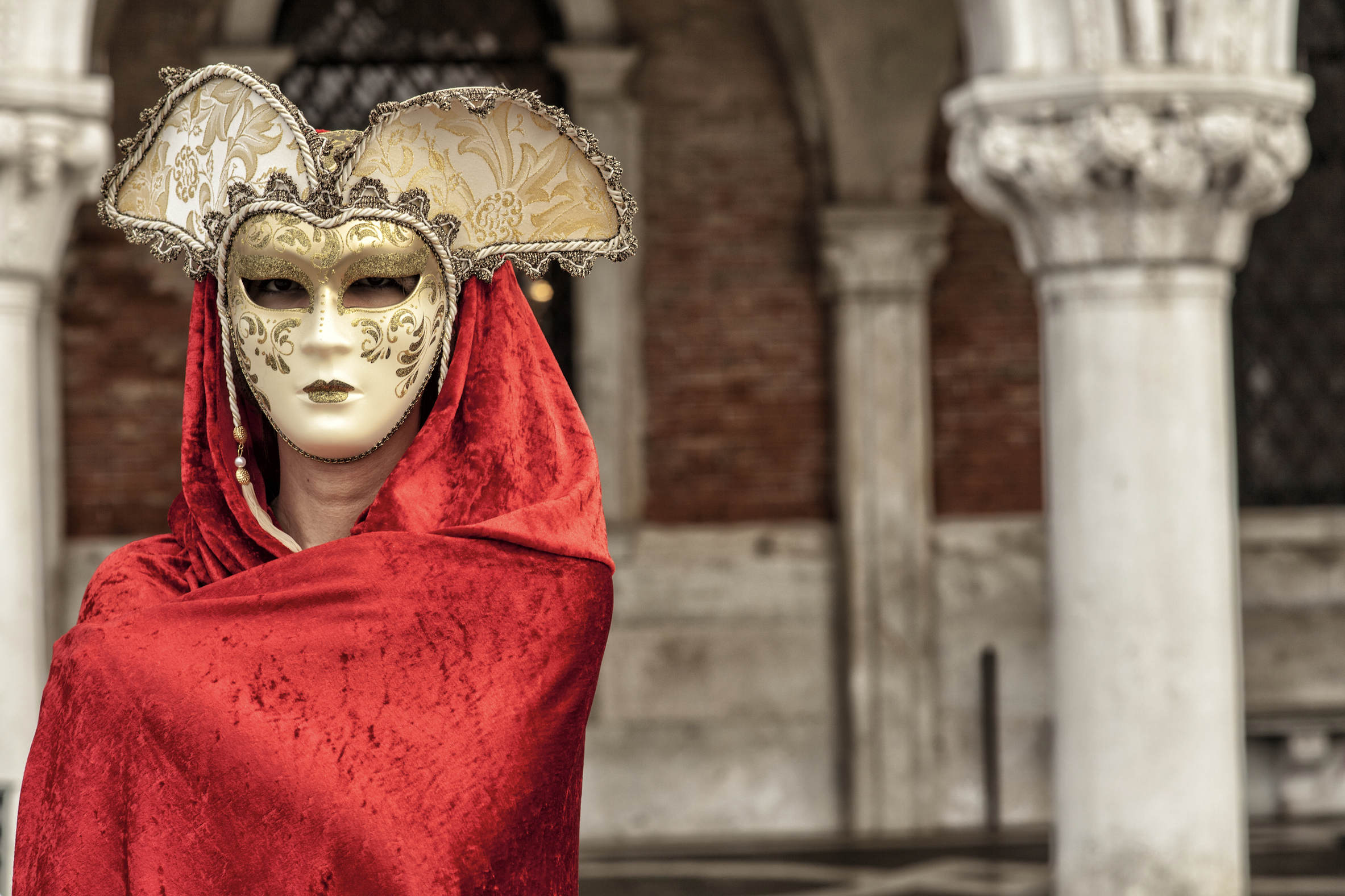
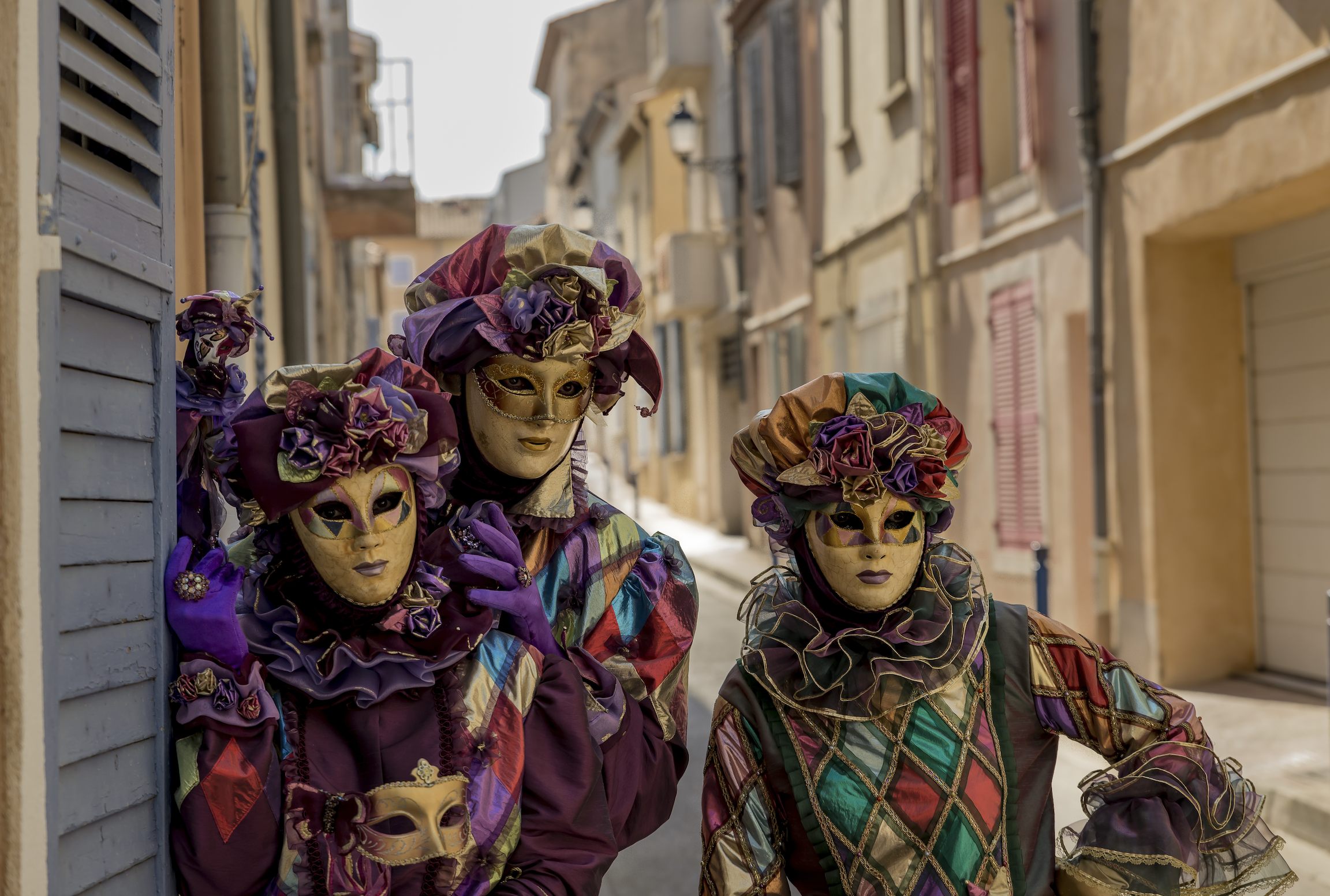
Picture yourself in the heart of Rome, surrounded by vibrant colors, music, and the festive spirit of one of Italy’s most beloved events—the Carnival of Rome. This spectacular celebration transforms the Eternal City into a living theater of masks, elaborate costumes, and ancient traditions that date back centuries. Unlike the massive crowds of summer tourism, the carnival season in Italy offers a unique opportunity to witness authentic Roman culture at its most joyful and expressive. The streets come alive with parades, street performances, and the infectious energy of locals and visitors alike celebrating together. If you’re seeking an unforgettable cultural experience that combines history, entertainment, and genuine Italian hospitality, the rome carnival deserves a prominent spot on your travel itinerary.

Discover the magic of Rome’s celebrations with a Rolling Rome Golf Cart Tour and experience the carnival atmosphere in comfort and style.

What Is Carnival in Rome?

The carnival in rome has deep historical roots stretching back to ancient Roman times, when winter festivals like Saturnalia celebrated the end of darker days with feasting and merrymaking. By the Renaissance period, the carnival of rome had evolved into an elaborate public spectacle featuring horse races along Via del Corso, theatrical performances, and masked balls hosted by wealthy noble families. Today, the festival maintains its cultural significance as a pre-Lenten celebration, marking a period of indulgence and joy before the solemn 40 days leading to Easter. Romans embrace this time as an opportunity to honor their heritage while creating new memories with family and community.

The main features of this carnival festival italy showcase the best of Roman creativity and tradition. Elaborate parades wind through historic streets, with participants wearing handcrafted masks and costumes inspired by commedia dell’arte characters, historical figures, and fantastical designs. Street performers entertain crowds with juggling, music, and impromptu theater, while vendors sell traditional carnival treats like frappe (crispy fried pastries dusted with powdered sugar) and castagnole (sweet fried dough balls). The atmosphere is electric yet welcoming, inviting everyone to participate regardless of age or background. You’ll find families creating their own costumes, children throwing colorful confetti, and locals sharing stories about carnival traditions passed down through generations.

Experience the festive streets of Rome on a Rome by Golf Cart Tour and capture the carnival spirit from the best vantage points.

When Is the Carnival Season in Italy

Understanding when is carnival season in italy requires knowing its relationship to the Christian liturgical calendar. The carnival season in italy always concludes on Shrove Tuesday (Martedì Grasso), the day immediately before Ash Wednesday, which marks the beginning of Lent. This means the dates shift each year based on when Easter falls, typically placing carnival festivities in late January through early or mid-February. The celebration period usually spans approximately two weeks, though the most intense activities concentrate in the final five days leading up to Shrove Tuesday. In 2026, expect the rome carnival to reach its peak in late February, transforming the city into a colorful festival destination.

The best time to visit carnival in rome falls during the final weekend and the Tuesday finale, when energy reaches its absolute peak. These days feature the largest parades, the most elaborate costumes, and the greatest concentration of street parties and public events. However, visiting earlier in the carnival season allows you to enjoy a more relaxed atmosphere while still experiencing authentic traditions, including smaller neighborhood celebrations that locals particularly cherish. The timing also coincides with pleasant late winter weather in Rome, making outdoor activities comfortable without the intense summer heat.

Learn more about winter in Rome and how the season enhances your carnival experience with mild temperatures and clear skies.

carnival rome

How to Experience Carnival Season in Italy

Making the most of celebrating carnival in rome italy requires planning and local insight to navigate the numerous events and celebrations. Start by researching the official carnival program, which typically includes scheduled parades in major piazzas, concerts featuring traditional Italian music, and designated areas for children’s activities. Arrive early to secure good viewing spots for parades, especially along popular routes like Via del Corso and around Piazza del Popolo. Consider purchasing or creating your own costume and mask to fully immerse yourself in the carnival spirit—Romans appreciate visitors who embrace their traditions with enthusiasm and respect.

One of the smartest approaches to experiencing the things to do during carnival in rome involves combining sightseeing with carnival festivities. A golf cart tour allows you to efficiently navigate between celebration zones while resting between activities, ensuring you don’t miss key events due to fatigue or poor timing. The mobility advantage becomes particularly valuable during carnival when streets are crowded and walking distances increase. Additionally, incorporating Roman cuisine into your carnival experience enhances authenticity—seek out restaurants serving traditional carnival foods like lasagna, gnocchi, and the essential carnival pastries that Romans have enjoyed for generations.

Enhance your carnival adventure with a Rome food tour and taste the special dishes that define this festive season.

Practical Tips for Carnival Visitors

Navigating the carnival season successfully requires attention to several practical considerations:

  • Accommodation Booking: Reserve hotels or vacation rentals at least two to three months in advance, as carnival attracts both Italian and international visitors, creating higher demand for centrally located properties.
  • Public Transportation: Expect bus route changes and metro station crowding during major carnival events. Walking or using alternative transportation like golf cart tours provides more reliable scheduling.
  • Restaurant Reservations: Popular dining establishments fill quickly during carnival evenings. Make reservations several days ahead, particularly for restaurants near celebration areas.
  • Weather Preparation: February weather in Rome remains mild but unpredictable. Pack layers, comfortable walking shoes, and a light rain jacket to stay comfortable throughout extended outdoor activities.

Top Events During Carnival Season in Italy

The calendar of top events during carnival season in italy in Rome offers diverse entertainment options appealing to different interests and age groups. The historical parade at Piazza del Popolo ranks as the carnival’s centerpiece, featuring elaborate floats decorated with flowers and papier-mâché sculptures, costumed performers representing characters from Italian folklore, and marching bands playing traditional carnival music. This parade typically occurs on the final Sunday of carnival, drawing thousands of spectators who line the piazza and surrounding streets hours before the scheduled start. The procession moves slowly enough for excellent photographs while maintaining an energetic pace that sustains excitement throughout its duration.

Beyond the main parade, numerous neighborhood celebrations called “carnevali rionali” take place throughout Rome’s various districts. These smaller but equally authentic events feature:

  1. Masquerade Balls: Historic palazzos and cultural centers host elegant evening balls where guests wear period costumes and dance to live orchestras playing waltzes and traditional Italian folk music.
  2. Street Theater Performances: Professional and amateur theater groups stage impromptu commedia dell’arte performances in piazzas, often involving audience participation and comedic improvisation.
  3. Children’s Carnival Activities: Dedicated zones in parks and public squares offer face painting, costume contests, puppet shows, and interactive games designed specifically for young carnival participants.
  4. Traditional Music Concerts: Churches and concert halls present performances of classical and folk music celebrating carnival’s cultural heritage, providing indoor entertainment options during cooler evenings.

The carnival of rome also features special themed evenings in the Trastevere neighborhood, where restaurants and bars coordinate decorations and offer carnival-inspired menus. This bohemian district transforms into a vibrant party zone where locals and tourists mingle freely, sharing drinks and dancing in cobblestone streets until late evening.

Navigate efficiently between carnival events with a convenient Rome by Golf Cart Tour and maximize your time at the celebrations.

Unique Carnival Traditions in Rome

Rome’s carnival distinguishes itself through several unique customs rooted in the city’s particular history. The “battaglia dei fiori” (battle of flowers) involves participants gently tossing flowers and confetti at each other while parading through streets, creating a colorful and fragrant spectacle. Another distinctive tradition involves the “corsa dei barberi,” historically a wild horse race down Via del Corso that, while no longer practiced with actual horses, is commemorated through costumed reenactments. Food traditions play an equally important role, with bakeries competing to create the most impressive “frappe” and “castagnole,” often displaying their creations in elaborate window arrangements that become tourist attractions in their own right.

carnival in winter rome

Why Celebrate Carnival in Rome?

Choosing to celebrate carnival in rome italy offers advantages beyond simply witnessing an interesting cultural event. The appeal lies in experiencing how ancient traditions merge seamlessly with contemporary Italian life, creating a celebration that feels simultaneously timeless and vibrantly current. Rome’s architectural grandeur provides an unmatched backdrop for carnival festivities—imagine watching costumed performers dancing near the Pantheon or seeing masked revelers strolling past the Colosseum. This juxtaposition of festive joy against millennia of history creates photographic and emotional moments impossible to replicate elsewhere. The Eternal City’s inherent romance and beauty intensify during carnival, when locals openly express their pride in Roman culture through enthusiastic participation and warm hospitality toward visitors.

The community aspect of carnival in rome creates particularly memorable experiences for travelers seeking authentic cultural immersion. Unlike tourist-oriented festivals designed primarily for visitor entertainment, Rome’s carnival remains a genuine local celebration where Romans celebrate for themselves and their families, welcoming outsiders to join rather than perform for them. You’ll encounter multi-generational groups crafting costumes together, elderly residents sharing carnival stories from their youth, and children experiencing traditions their grandparents also enjoyed. This continuity of culture provides insight into Roman identity and values that typical sightseeing rarely reveals.

The Carnival Food Experience

Food traditions during the carnival festival italy reach their peak in Rome, where bakeries and restaurants prepare special dishes exclusively during this season. The most iconic treats include:

  • Frappe: Thin, crispy ribbons of fried dough dusted generously with powdered sugar, sometimes called “chiacchiere” or “bugie” in different Italian regions
  • Castagnole: Small, round fried dough balls flavored with lemon zest or liqueur, light and slightly sweet
  • Tortelli: Fried pastries filled with ricotta cheese and sometimes chocolate chips, representing a heartier carnival dessert
  • Sanguinaccio: A traditional chocolate pudding historically made with pig’s blood (modern versions use chocolate and milk) served with cookies for dipping

These treats appear in bakery windows weeks before carnival officially begins, their presence signaling the approaching festival and creating anticipation throughout the city. Sampling carnival pastries from different bakeries becomes an enjoyable quest for food enthusiasts, as each establishment maintains its own recipe variations passed down through family generations.

Return to Rolling Rome to plan your complete carnival experience, including culinary discoveries and cultural explorations.

Essential Planning Information

Successfully planning your carnival experience requires attention to specific logistical details that differ from general Rome tourism. Carnival crowds, while smaller than summer tourist numbers, concentrate heavily in specific areas during major events, necessitating strategic timing and location choices. Arriving at parade routes at least one hour before scheduled start times ensures better viewing positions, though flexibility remains important as Italian events sometimes begin later than officially announced. Many carnival activities occur in evening hours when temperatures drop, making warm layers essential despite Rome’s generally mild February climate.

Transportation considerations become particularly important during carnival season. Major streets close to vehicle traffic during parades and celebrations, affecting taxi routes and ride-sharing pickup locations. Public transportation experiences increased ridership during peak carnival hours, potentially causing delays or crowding. These factors make golf cart tours an increasingly attractive option, as they navigate accessible routes efficiently while providing comfort and convenience. The ability to rest between activities while still moving toward your next destination proves invaluable during multi-day carnival visits.

Budget planning should account for carnival-specific expenses beyond typical Rome tourism costs. Costume purchases or rentals, if you choose to participate fully in the celebration, range from modest masks costing a few euros to elaborate period costumes requiring significant investment. Restaurant prices may increase slightly in high-demand areas during carnival weekends, though Rome maintains relatively reasonable dining costs compared to other major European cities. Attraction entrance fees remain standard, though reduced wait times during carnival season allow you to visit more sites in less time, potentially increasing your overall sightseeing budget.

Capturing Carnival Memories

Photography opportunities during the rome carnival rival those of any major global festival, with the added advantage of Rome’s spectacular architectural settings. The combination of elaborate costumes, historic buildings, and the golden light characteristic of Roman winter creates ideal conditions for memorable images. Successful carnival photography requires respecting participants’ privacy while capturing the event’s energy—always ask permission before photographing individuals in costume, though most carnival-goers happily pose for photos. The best photographs often come from candid moments showing authentic emotion: children laughing as they throw confetti, elderly couples dancing together in period costumes, or performers interacting with delighted audiences.

Strategic timing produces the most dramatic photographs during carnival. The “golden hour” just before sunset bathes Rome’s honey-colored buildings in warm light that enhances costume colors and creates flattering portraits. Evening events offer opportunities for creative low-light photography, capturing the glow of street lamps reflecting off sequined costumes or the romantic atmosphere of candlelit masquerade balls. For action shots of parades, position yourself along parade routes where interesting backgrounds like fountains or monuments provide context showing the event’s Roman setting rather than just isolated subjects.

Conclusion

The carnival in rome represents far more than colorful costumes and festive parades—it embodies centuries of cultural tradition, community celebration, and Roman pride expressed through joyful public gatherings. This carnival festival italy offers travelers a privileged glimpse into authentic local life while providing entertainment value comparable to world-famous carnivals in Venice or Rio de Janeiro, with the added advantage of Rome’s incomparable historical setting. The combination of ancient traditions, contemporary festivities, and the warm hospitality characteristic of Roman culture creates an experience that satisfies both cultural curiosity and the desire for memorable vacation moments. Whether you’re a history enthusiast drawn to carnival’s Renaissance origins, a food lover eager to sample traditional carnival pastries, or simply someone seeking unique experiences beyond typical tourist activities, the carnival of rome delivers on multiple levels.

The accessibility and relatively compact geographic concentration of Rome’s carnival events make it manageable for travelers of all ages and fitness levels, especially when utilizing efficient transportation options like golf cart tours. Unlike massive festivals requiring days to navigate properly, Rome’s carnival allows comprehensive participation during a long weekend visit while still permitting time for conventional sightseeing at reduced-crowd landmarks. This efficient combination of cultural celebration and practical tourism makes February an increasingly popular time for sophisticated travelers who appreciate Rome’s offerings without summer’s overwhelming crowds and heat.

Ready to join the celebration and experience Rome’s carnival magic firsthand? Plan your carnival adventure with Rolling Rome and discover why this ancient tradition continues captivating hearts in the modern age.

FAQ

When is the Carnival season in Rome?

The carnival season in Rome typically occurs in February, lasting approximately two weeks and culminating on Shrove Tuesday (the day before Ash Wednesday). Because Easter dates change annually, carnival dates also shift—in 2026, expect peak celebrations in late February. The final weekend and Shrove Tuesday feature the largest parades and most elaborate events, though earlier carnival days offer authentic neighborhood celebrations with fewer crowds.

What are the best events during Carnival in Rome?

The grand parade at Piazza del Popolo stands out as the carnival’s signature event, featuring elaborate floats, costumed performers, and traditional music. Other exceptional experiences include masquerade balls in historic palazzos, street theater performances throughout Trastevere and the historic center, children’s carnival activities in public parks, and food festivals celebrating traditional Roman carnival cuisine. Neighborhood celebrations in various districts provide more intimate settings for experiencing authentic local traditions.

How can I experience Carnival in Rome?

Experiencing carnival in Rome effectively involves combining advance planning with spontaneous participation. Book accommodations early, research the official carnival schedule, and consider joining guided tours like golf cart tours that navigate between events efficiently. Purchase or create a costume and mask to participate fully in the celebration’s spirit. Sample traditional carnival foods from local bakeries and restaurants, attend both major parades and smaller neighborhood events, and remain flexible to enjoy unexpected street performances and impromptu celebrations that make carnival special.

Why is Carnival in Rome important?

The carnival in Rome holds importance as a living connection to centuries of cultural tradition, religious practice, and community identity. It represents the pre-Lenten period of celebration before the solemn Lenten season, serving both religious and social functions in Roman life. The festival preserves historical customs while adapting to contemporary life, demonstrating Rome’s ability to honor its past while remaining vibrant and relevant. For Romans, carnival provides an annual opportunity to celebrate their cultural heritage, strengthen community bonds, and express creativity through costume and performance.

What should I wear to Carnival in Rome?

Carnival participants in Rome typically wear colorful costumes ranging from simple masks and capes to elaborate period outfits inspired by Renaissance nobility or commedia dell’arte characters. Visitors can choose their level of participation—a simple decorative mask satisfies basic carnival spirit, while full costumes allow deeper immersion in the celebration. Many costume shops and vendors operate during carnival season, offering rental options. For those not wearing costumes, dress comfortably with layers suitable for February weather, as you’ll likely spend extended time outdoors during parades and street celebrations.

Can I explore Rome during Carnival?

Absolutely—carnival season provides an excellent opportunity to explore Rome with fewer tourists than summer months while experiencing the city’s festive atmosphere. Streets come alive with decorations, performances, and celebrations that enhance standard sightseeing. A golf cart tour proves particularly valuable during carnival, offering efficient transportation between celebration zones and traditional attractions while providing rest periods between activities. Major landmarks remain open with normal or extended hours, and reduced wait times allow visiting more sites than typically possible during peak season.

Ready to join the celebration and experience Rome’s carnival magic firsthand? Plan your carnival adventure with Rolling Rome and discover why this ancient tradition continues captivating hearts in the modern age. For those interested in exploring the broader history and global variations of Carnival celebrations, additional information can be found at this comprehensive Carnival resource.

Rolling Rome local guideWritten by the Rolling Rome team
Local guides sharing the stories of Rome since 2013.

Keep reading

You may also like

Continue reading

What to Eat in Rome

food in rome

What to Eat in Rome?

October 3, 202510 min readFood & drink

Rome’s culinary scene is a vibrant tapestry of flavors, shaped by centuries of tradition and regional influences. From creamy carbonara prepared with guanciale and pecorino cheese to peppery cacio e pepe that showcases the beauty of simplicity, every dish tells a story.

Beyond the classics, travelers can enjoy crispy artichokes, hearty meat dishes, and fresh seafood that highlight the Eternal City’s connection to the Mediterranean. Authentic dining experiences await in Trastevere’s family-owned trattorias, where recipes are passed down through generations, far from the tourist traps lining the main piazzas.

Rolling Rome’s Food Tours take you beyond the obvious, guiding you through hidden gems and local eateries where Romans actually dine. With expert-led tastings, you’ll savor what to eat in Rome while discovering cultural insights that make every bite meaningful. Join a food tour today and embark on an unforgettable gastronomic journey through the very heart of Rome.

Understanding Roman Cuisine

Roman cuisine is defined by its bold flavors, humble origins, and deep connection to local traditions. Hearty pasta dishes like carbonara, amatriciana, and gricia rely on simple but high-quality ingredients, reflecting the frugality and creativity of the city’s past.

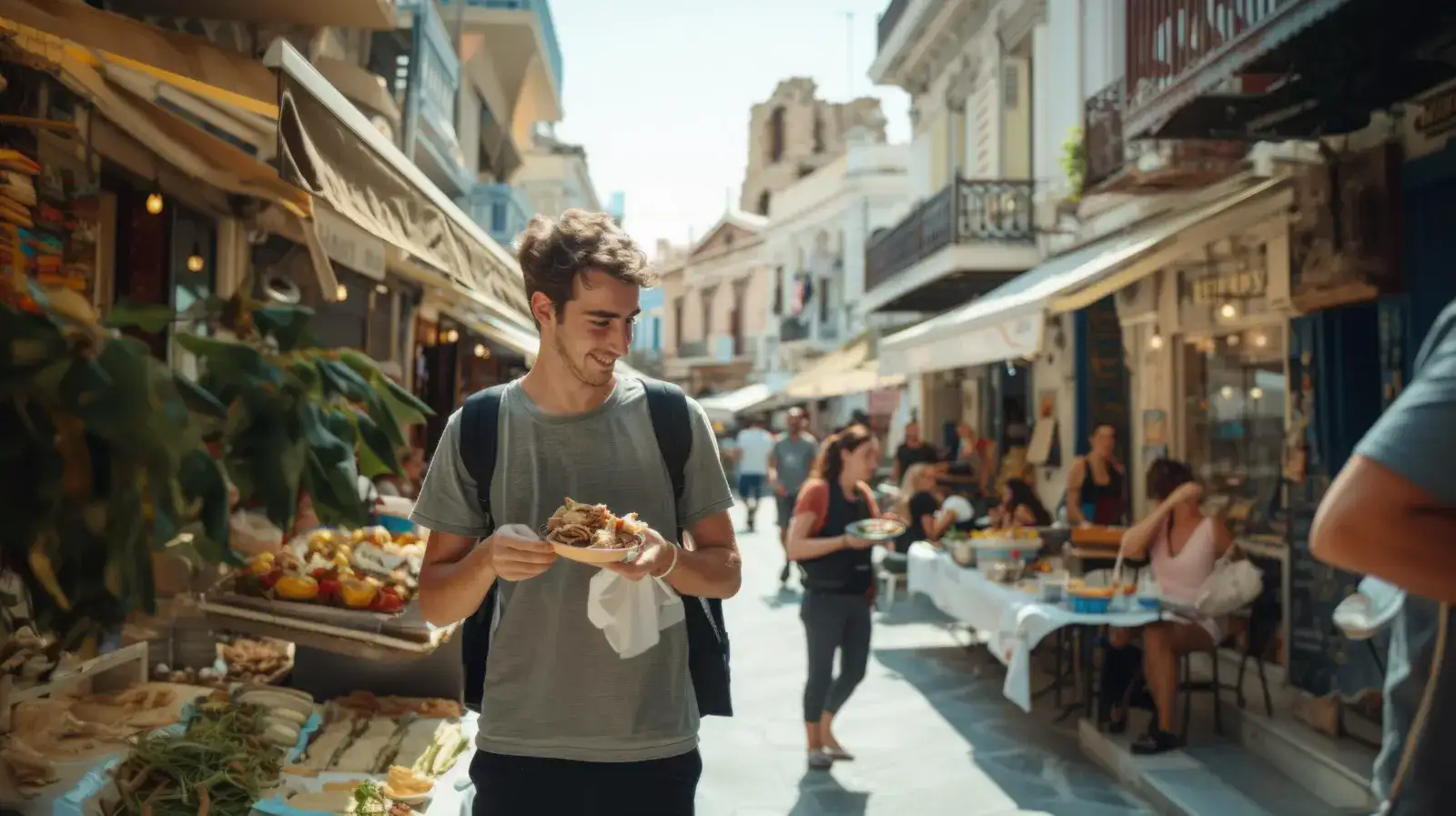
Street food such as supplì—fried rice balls filled with mozzarella—provide an authentic taste of daily Roman life, while offal specialties like tripe and oxtail stew trace their roots to Testaccio, once the city’s slaughterhouse district. In the Jewish Ghetto, traditions like carciofi alla giudia (crispy fried artichokes) showcase the rich cultural influences woven into Roman dining.

Sweet endings like tiramisu or maritozzi with whipped cream balance the savory intensity of the cuisine. Rolling Rome’s Food Tours bring these flavors together in one curated experience, connecting you directly to what to eat in Rome Italy. According to tourism data, over 70% of visitors now prefer guided food tours, ensuring they discover authentic flavors and avoid tourist-oriented imitations.

Benefits of Exploring Roman Food with Food Tours

Authentic Culinary Experiences

One of the main reasons travelers choose Rolling Rome’s Food Tours is the authenticity. Instead of settling for overpriced imitations near the Colosseum or Trevi Fountain, these tours bring you face-to-face with Rome’s true gastronomic heritage.

You’ll taste what food to eat in Rome—from traditional carbonara with al dente pasta to freshly fried supplì made by local families. Every stop is carefully selected to highlight real Roman flavors that locals enjoy daily, giving you a genuine sense of the city’s identity through its cuisine.

Cultural and Historical Insights

Food in Rome isn’t just about eating—it’s about history and culture on a plate. Expert guides explain how Testaccio’s slaughterhouse gave rise to iconic offal dishes, while the Jewish Ghetto’s culinary traditions introduced flavors like fried artichokes and slow-cooked stews.

When you explore what to eat in Rome Italy with Rolling Rome, you don’t just enjoy the food—you understand the centuries-old context that shaped it. This blend of taste and history creates a dining experience you’ll carry with you long after the tour ends.

Cost-Effective and Memorable

Another advantage of guided food tours is the value. Rome can be expensive if you fall into tourist traps, but curated tours avoid overpriced venues and instead take you to authentic eateries offering high quality at fair prices.

Reviews consistently highlight Rolling Rome’s tours as a smart choice for travelers who want both quality and savings. With a 4.7/5 rating on major travel platforms, these tours are recognized for creating memorable experiences that balance flavor, culture, and affordability.

Rome’s dining scene is vast and exciting, but also challenging for first-time visitors. Between language barriers, hidden trattorias, and the abundance of tourist-oriented restaurants, it’s easy to miss the best spots.

Trastevere’s cobbled streets hide some of the most beloved trattorias, while Testaccio’s bustling markets showcase authentic flavors, but without local knowledge they can be hard to find. Rolling Rome’s Food Tours solve this problem by offering insider access to what to eat when in Rome — whether you’re looking for traditional pasta, seasonal vegetables, or vegetarian-friendly meals.

According to TripAdvisor, more than 60% of travelers report better dining experiences when joining guided tours, thanks to the expertise of local guides. By booking a tour, you unlock hidden culinary treasures, avoid common pitfalls, and enjoy a seamless journey through Rome’s food culture. It’s the easiest way to ensure every meal is a highlight of your Roman holiday.

food in Italy Rome

Iconic Roman Dishes to Try

Must-Try Roman Classics

Savor what foods to eat in Rome with these timeless dishes that represent the very essence of the Eternal City’s culinary tradition:

  • Carbonara: A creamy pasta dish made with egg yolks, guanciale, pecorino Romano, and black pepper. Originally from Trastevere, it remains one of Rome’s most celebrated recipes, and no two trattorias prepare it exactly the same way.
  • Cacio e Pepe: Simplicity at its finest—just pasta, pecorino cheese, and cracked black pepper. This dish shows how minimal ingredients can create unforgettable flavor.
  • Supplì: Crispy fried rice balls with mozzarella inside, often described as “Rome’s answer to street food comfort.” A perfect on-the-go snack that locals adore.
  • Carciofi alla Giudia: Crispy Jewish-style artichokes, deep fried until golden, originating from the historic Jewish Ghetto. A dish that blends cultural heritage with irresistible taste.
  • Amatriciana: Pasta tossed with tomato sauce, guanciale, and pecorino, hailing from nearby Amatrice but perfected in Rome.
  • Maritozzi: Sweet buns filled with whipped cream, often enjoyed with morning coffee, a must for those wanting to explore beyond savory dishes.

Voices of Culinary Travelers

Travelers often highlight these dishes as the most memorable parts of their trip:

“The carbonara was unforgettable—creamy, rich, and perfectly balanced!” – Rolling Rome guest.

“Rome’s food is soulful simplicity. Every bite tells a story of tradition.” – Anthony Bourdain.

“From supplì on cobbled streets to elegant trattoria dinners, I finally understood what to eat in Rome Italy beyond the tourist traps.” – Food blogger review.

Best Tour Stops

Rolling Rome’s Food Tours offer tastings with expert insights, blending history, culture, and flavor. From Campo de’ Fiori’s bustling market stalls to Testaccio’s hidden trattorias, every stop has been curated to highlight authentic Roman life. These tours connect you to small family-run businesses that carry on centuries-old recipes, making your culinary journey both delicious and culturally meaningful. Book a tour to explore the best of Roman cuisine while enjoying insider knowledge you won’t find in guidebooks.

Best Practices for Food Exploration in Rome

To truly discover what to eat in Rome, book Rolling Rome’s Food Tours for curated experiences that guarantee authenticity and depth. Markets like Campo de’ Fiori are perfect for exploring fresh produce, artisanal cheeses, and cured meats, while Testaccio offers vibrant stalls where locals shop daily. Visiting these markets with a knowledgeable guide adds context and ensures you try the best selections.

Supporting small trattorias and family-owned osterias is another way to enjoy genuine Roman cuisine. Skip chain restaurants or flashy venues near the main monuments, and instead step into hidden corners where recipes are passed down across generations. According to tourism data, over 80% of food tour slots sell out early during peak seasons—so reserve your place in advance to avoid missing out on this one-of-a-kind experience.

By combining markets, street food, and traditional dining, you’ll taste Rome’s full culinary spectrum in just a few days.

Comparing Walking Tour vs Food Tour by Golf Cart

A what to eat in Rome food tour by golf cart offers distinct advantages over traditional walking tours, making it the preferred option for many travelers. Both have their charm, but the golf cart adds comfort and reach without sacrificing authenticity.

Feature Food Tour by Golf Cart Walking Food Tour
Comfort Shaded, relaxed ride with no fatigue, ideal for all ages. Physically demanding, especially in summer heat or cobblestone streets.
Coverage Visits multiple neighborhoods in one trip, including Trastevere, Testaccio, and Campo de’ Fiori. Limited to a smaller area, usually one neighborhood at a time.
Experience Scenic, personalized stops at authentic trattorias, local bakeries, and historic markets. Immersive but tiring, with fewer chances to cover the variety of dining spots.
Accessibility Great for families, seniors, or anyone who wants to maximize time without physical strain. Requires stamina and may not be suitable for everyone.

Golf cart tours cover more ground with ease, bringing you directly to Roman neighborhoods like Trastevere, Testaccio, and the Jewish Ghetto. They allow for a mix of sightseeing and tasting in comfort, making them an excellent choice for travelers who want to balance food exploration with sightseeing. Walking tours, while immersive, can be physically demanding, and often limit how many authentic stops you can enjoy in a single outing.

For those who want a blend of comfort, efficiency, and authenticity, a golf cart food tour is the ultimate way to experience what to eat when in Rome.

Frequently Asked Questions

What is Roman cuisine?

Roman cuisine features pasta like carbonara, street food such as supplì, and offal dishes, rooted in Testaccio and Jewish Ghetto traditions, offering authentic flavors.

What are the must-try foods in Rome?

Carbonara, cacio e pepe, supplì, and carciofi alla giudia are iconic dishes, showcasing what foods to eat in Rome with bold, simple flavors.

How do food tours enhance the Rome dining experience?

Food tours Rome offer expert-led tastings, skipping tourist traps for authentic trattorias, ensuring a memorable culinary adventure.

Are vegetarian options available on Rome food tours?

Yes, Rolling Rome includes vegetarian-friendly stops, catering to diverse diets with authentic flavors.

How can I avoid tourist traps when dining in Rome?

Join a Rome by Golf Cart Tour for insider tips on what to eat when in Rome, ensuring authentic dining experiences.

Rolling Rome local guideWritten by the Rolling Rome team
Local guides sharing the stories of Rome since 2013.

Keep reading

You may also like

Continue reading

Why Golf Cart Tour to Colloseum is an Great Option?

colosseum tour

Why a Golf Cart Tour to the Colosseum is a Great Option

September 26, 20254 min readGolf cart tours

The Colosseum, Rome’s iconic amphitheater, stands as a testament to ancient engineering and history, drawing millions of visitors each year. Exploring this landmark with a golf cart tour offers unmatched comfort, insider knowledge, and a unique perspective on Rome’s grandeur. With Rolling Rome, you can skip the hassle of crowded streets and dive into the city’s rich past effortlessly. Experience the Colosseum the easy way with a tour designed for convenience and immersion. Discover why a Colosseum tour via golf cart is the perfect way to explore Rome’s heart.

Rome’s Colosseum: A Timeless Wonder

The Colosseum, built in 70-80 AD, is a marvel of Roman architecture, hosting gladiatorial battles and public spectacles. Its enduring presence makes it a must-visit, with over 7 million tourists annually, according to UNESCO data. A best Colosseum tour brings this history to life, offering insights into its construction and cultural significance. Unlike standard visits, guided tours provide context, revealing stories of emperors and gladiators. Rolling Rome’s golf cart tours blend this historical depth with modern convenience, ensuring a memorable journey through Rome’s past.

colosseum rome tour

Benefits of a Colosseum Golf Cart Tour

A Rome golf cart tour with Colosseum redefines sightseeing with ease and exclusivity. These tours offer:

  • Convenience: Avoid long walks across Rome’s cobblestone streets, arriving at the Colosseum refreshed.
  • Exclusive Access: Enjoy private entry options and tailored narratives from expert guides.
  • Comprehensive Experience: Combine the Colosseum with landmarks like the Roman Forum in a single trip.

With Rolling Rome, you cover more ground in less time, making it ideal for travelers seeking efficiency. Data from tourism boards shows guided tours increase satisfaction by 30% compared to self-guided visits.

Why Not Explore the Colosseum on Your Own?

Navigating the Colosseum without a guide often means battling crowds, enduring long queues, and missing key historical details. Over 60% of visitors report feeling overwhelmed by the site’s scale, per TripAdvisor reviews. A Colosseum private tour eliminates these challenges, offering skip-the-line access and expert storytelling. Rolling Rome’s golf cart tours provide a stress-free experience, weaving in insider facts about the arena’s past. Book your Rome Colosseum tour today for a seamless and enriching adventure.

Highlights of the Colosseum Experience

Guided Insights

A Colosseum Rome tour unveils the arena’s secrets, from gladiator battles to its architectural brilliance. Guides share vivid stories, like how the Colosseum’s hypogeum housed exotic animals. You’ll also learn about its innovative design, with 80 arches supporting 50,000 spectators. These details transform a visit into a journey through time.

Traveler Voices

“Exploring the Colosseum with a Golf Cart Tour made history come alive. The guide’s stories and the comfortable ride were unforgettable!” – Sarah, USA

Such feedback highlights why Rolling Rome’s tours stand out, with a 4.8/5 rating on travel platforms.

Best Pairings

A best Colosseum tour often includes the Roman Forum and Palatine Hill, offering a complete picture of ancient Rome. Rolling Rome crafts itineraries that blend these sites seamlessly, maximizing your experience. Celebrate Rome with a Colosseum & Golf Cart Tour for an unforgettable adventure.

Tips for Making the Most of Your Colosseum Tour

To elevate your Colosseum tour Rome, book early to secure your spot, as slots fill up fast—over 80% are reserved weeks in advance, per tourism data. Opt for a private guide for personalized insights and skip-the-line access. Combine your visit with nearby sites like the Roman Forum for a fuller experience. Rolling Rome’s golf cart tours ensure stress-free travel, letting you focus on the history and beauty of Rome’s landmarks.

Golf Cart Tour vs. Walking Tour

A golf cart tour Rome offers distinct advantages over walking tours, especially for the Colosseum. Here’s a comparison:

Feature Golf Cart Tour Walking Tour
Comfort Relaxed ride, seated access Physically demanding
Coverage Combines Colosseum with other sites Limited to one or two locations
Experience Personalized stories, exclusive access Authentic but tiring

Golf cart tours save energy and time, covering more in a single trip. For a Rome Colosseum tour, this means a richer, more comfortable experience.

private tour of colosseum

FAQ

Why choose a Golf Cart Tour for the Colosseum?

A Rome golf cart tour with Colosseum blends comfort and expert guidance, offering efficient sightseeing with direct access. It’s ideal for those seeking a hassle-free visit.

Is a private tour of the Colosseum possible?

Yes, Rolling Rome provides Colosseum private tours with skip-the-line entry and customized itineraries for a tailored experience.

Can I see more than the Colosseum on this tour?

Absolutely, tours include the Roman Forum, Palatine Hill, and city highlights, offering a comprehensive Rome experience in one trip.

How long does a Colosseum Golf Cart Tour last?

Most tours last 3–4 hours, providing ample time to explore the Colosseum and additional sites without feeling rushed.

Is this the best way to tour the Colosseum in Rome?

A best Rome Colosseum tour via golf cart combines authentic history with stress-free travel, making it a top choice for visitors.

Rolling Rome local guideWritten by the Rolling Rome team
Local guides sharing the stories of Rome since 2013.

Keep reading
You may also like

Continue reading

Where to Try Good Wine in Rome?

Italian Wine in Rome

Where to Try Good Wine in Rome?

September 26, 20255 min readFood & drink

Rome’s wine culture blends centuries-old traditions with vibrant modern enotecas, offering unforgettable wine tasting in Rome. From ancient vineyards in nearby Lazio to cozy wine bars in Trastevere, the Eternal City invites you to savor iconic varietals like Frascati and Cesanese. RollingRome golf cart tours provide a comfortable, immersive way to pair authentic Rome wine tastings with sightseeing, ensuring you experience the city’s flavors effortlessly. Discover Rome through its wine by booking a curated tour today. Explore Rome Food Tours.

Rome’s Wine Culture: Tradition Meets Modern Tastes

Rome is a paradise for wine lovers, with its proximity to Lazio’s lush vineyards, just 30 miles away, producing renowned varietals like Cesanese and Frascati. For centuries, Romans have paired meals with local wines, a tradition thriving in modern enotecas across neighborhoods like Testaccio and Campo de’ Fiori. These wine bars offer tastings of crisp Frascati whites and bold Montefiascone reds, often alongside artisanal cheeses. In 2024, Rome’s enotecas welcomed over 2 million visitors, showcasing the city’s vibrant wine tasting in Rome. Dive into this heritage with RollingRome.com’s curated Rome wine tours. Discover Rome Wine Tours.

Why Choose a Wine Tasting Tour with a Golf Cart

  • Authentic Experience: Sample handpicked wines at local enotecas, hidden gems often overlooked by tourists.
  • Cultural Insights: Expert guides share stories of Lazio’s vineyard history and perfect food pairings.
  • Comfort & Coverage: Glide through Rome’s neighborhoods, visiting multiple wine spots without tiring walks.

A Rome wine tasting tour with RollingRome.com blends ease and authenticity. These golf cart tours let you explore diverse enotecas, from historic cellars to modern bars, while soaking in Rome’s charm. With over 80% of travelers preferring guided tours for local insights, this experience ensures you savor the best wine tour Rome offers in style. Book a Rome Wine Tour.

Challenges of Finding Good Wine on Your Own

Navigating Rome’s wine scene solo can be daunting due to tourist traps inflating prices by up to 40% in popular areas. Language barriers often limit access to authentic tastings, and many enotecas are tucked in side streets, hard to find without local knowledge. RollingRome.com’s Golf Cart Tours solve this, offering insider access to curated wine tours from Rome, skipping queues and tailoring tastings to your preferences. Enjoy private or personalized experiences, savoring authentic flavors effortlessly. Book your Rome Wine & Golf Cart Tour today. Explore Rome Off the Beaten Path Food Tour.

Must-Try Wine Experiences

Signature Varietals

  • Cesanese: A bold Lazio red with rich berry notes, perfect for meat dishes.
  • Frascati: Rome’s crisp white, grown in volcanic soil, is ideal with seafood.
  • Montefiascone: A historic white varietal, cherished since medieval times.
  • Chianti: A Tuscan favorite, widely poured in Rome’s enotecas.

Traveler Voices

“Sipping Frascati while overlooking the Forum during our Golf Cart Tour was unforgettable!” – Sarah, 2024

Best Stops

Rome’s wine scene shines brightest with RollingRome.com’s guided tours, connecting multiple enotecas with iconic sights like the Colosseum. These Rome wine tours cover Trastevere’s cozy bars and Campo de’ Fiori’s vibrant scene, ensuring diverse tastings in one trip. With 90% of tour-goers rating guided wine experiences as “excellent,” this is the most efficient way to savor Rome’s flavors. Celebrate Rome with a guided Wine & Golf Cart Tour. Join a Rome Wine Tour.

wine tour in rome

Tips for Enjoying Rome’s Wine Scene

Book wine tastings in advance to secure spots at popular enotecas in Trastevere or Campo de’ Fiori. Pair wines with Roman dishes like cacio e pepe for authentic flavors. Explore neighborhood wine bars for local vibes, but for stress-free tastings and sightseeing, choose RollingRome Food Tours on Golf Cart’s. These combine curated wine-tasting experiences in Rome with effortless travel across the city’s historic streets. Start your journey with a Rome wine tasting tour for an unforgettable adventure. Discover Rome Food Tours.

Golf Cart Tour vs. Exploring on Foot

Feature Golf Cart Tour Walking Tour
Comfort Relaxed ride, seated tastings Physically demanding
Coverage Multiple enotecas in one day Limited range
Experience Personalized wine pairings & stories Authentic but tiring

A golf cart tour Rome enhances wine tasting by offering comfort and wider coverage. Unlike walking tours, which can exhaust travelers after 3–4 miles, golf carts visit diverse enotecas effortlessly. With RollingRome.com, you enjoy curated Rome wine tasting tours, blending cultural insights with relaxation. Book a Golf Cart Tour.

rome wine tasting

FAQ

What wines is Rome known for?

Rome boasts Frascati (white), Cesanese (red), and Montefiascone, varietals rooted in Lazio’s volcanic soil. These wines, often paired with Roman dishes like amatriciana, shine in local enotecas. Guided Rome wine tours elevate the experience with expert pairings.

Where is the best place to try wine in Rome?

Trastevere, Campo de’ Fiori, and Testaccio host Rome’s top enotecas, offering authentic wine tasting in Rome. Hidden gems are best explored via guided wine tours near Rome, ensuring access to curated spots with rich local flavors.

How do Golf Cart Tours enhance a Rome wine tasting tour?

Golf cart tours combine sightseeing with curated tastings, covering multiple neighborhoods comfortably. They avoid the fatigue of walking tours, offering personalized insights into Rome’s wine culture. RollingRome.com ensures a seamless wine tour Rome experience.

Are there vegetarian-friendly wine pairings in Rome?

Yes, local tastings often pair wines with vegetarian options like cheeses, bruschetta, or artichokes. Enotecas in Trastevere and guided tours cater to dietary needs, ensuring a delightful Rome wine tasting experience for all.

Is a Rome Wine Tour worth it?

Absolutely. Guided tours offer authentic tastings, cultural insights, and access to hidden enotecas, bypassing tourist traps. With 95% of travelers praising curated wine tours from Rome, they’re a must for wine lovers.

Rolling Rome local guideWritten by the Rolling Rome team
Local guides sharing the stories of Rome since 2013.

Keep reading

You may also like

Continue reading

What Street Food is Rome Famous For?

rome food tour

What Street Food is Rome Famous For?

September 19, 20254 min readFood & drink

Rome is not only about ancient ruins and breathtaking piazzas. It is also a paradise for food lovers, where street food is a daily ritual. Every bite tells a story, blending tradition with authentic flavors.

From crispy snacks to hearty sandwiches, the streets are filled with culinary treasures. With RollingRome.com’s Golf Cart Tours, you can taste these delights while exploring the Eternal City in comfort.

Discover Rome’s street food with a Golf Cart Tour!

Iconic Street Foods of Rome

Roman street food reflects centuries of tradition and local pride. Among the most beloved dishes is supplì—fried rice balls with mozzarella that melt in the center. These crispy bites have been a Roman favorite since the 19th century.

Another classic is pizza al taglio, sold by the slice and topped with endless combinations. It is quick, satisfying, and part of everyday life in Rome.

Modern innovations also shine. Trapizzino takes pizza dough and folds it into a pocket filled with gourmet stews. Meanwhile, the legendary porchetta sandwich delivers bold flavors with slow-roasted pork and herbs.

On RollingRome.com’s Rome Food Tours, you can enjoy these specialties in authentic neighborhoods. It’s the best way to learn not only what food is Rome known for but also the history behind each dish.

Book your Rome Food Tour Easy With Us!

food in rome

Why Explore Street Food with a Golf Cart Tour

  • Authentic Flavors
    RollingRome.com’s Golf Cart Tours take you to local gems hidden in side streets. Guests taste authentic Roman bites without the stress of long walks.
  • Cultural Insights
    Each dish has a story. Our guides explain how these foods connect to Roman history, lifestyle, and traditions.
  • Efficient & Comfortable
    You can cover multiple neighborhoods in one day. This means sampling a wide variety of street food Rome while avoiding fatigue.

Every golf cart tour Rome turns into a perfect mix of flavors, history, and relaxation.

Challenges of Exploring Street Food on Your Own

Finding authentic Roman food is not always simple. Travelers often struggle to identify local spots that avoid tourist traps. Many also face language barriers when ordering.

Long queues are another challenge, especially at popular bakeries and markets. Without guidance, it’s easy to miss hidden gems or spend too much time waiting.

With RollingRome.com, these problems disappear. Our tours provide insider access, shorter lines, and even family-friendly or vegetarian tasting options.

Book your Rome Food & Golf Cart Tour today Rome by Golf Cart Tour and enjoy a new food experience Rome with no stress.

Must-Try Street Food Experiences

Must-Taste Foods in Rome

  • Supplì
  • Pizza al taglio
  • Gelato
  • Trapizzino

Traveler Voices

“Eating pizza al taglio near Campo de’ Fiori during our Golf Cart Tour was unforgettable!”

Best Stops

RollingRome makes it easy to connect food and culture. Guests can move quickly between tastings and landmarks, turning every bite into a memorable moment of Rome street food.

Celebrate Rome with a guided Food & Golf Cart Tour Eating Europe Food Tours – Is It Worth It?

rome street food

Golf Cart Tour vs. Exploring on Foot

Feature Golf Cart Tour Walking Tour
Comfort Relaxed ride, easy stops Physically demanding
Coverage Multiple neighborhoods in a day Limited range
Experience Personalized tastings & cultural context Authentic but tiring

Exploring food by foot can be rewarding, but also exhausting. A golf cart tour Rome makes it smooth, efficient, and enjoyable.

FAQ

What food is Rome known for?

Rome is famous for supplì, pizza al taglio, trapizzino, porchetta sandwiches, and gelato. These classics define the city’s street food culture.

Where is the best place to try street food in Rome?

Markets like Campo de’ Fiori and Testaccio are great spots to taste authentic bites. Many are included in guided food and golf cart tours.

How do Golf Cart Tours enhance a Rome food tour?

They combine sightseeing with food tastings. Guests explore more neighborhoods, sample more dishes, and avoid crowds and fatigue.

Are there vegetarian street food options in Rome?

Yes. Pizza al taglio with fresh toppings, fried zucchini flowers, and artichokes are popular vegetarian favorites.

Is a Rome Food Tour worth it?

Definitely. Guided tours guarantee authentic flavors, insider access, and cultural context. Visitors taste the real Rome, not just tourist snacks.

Rolling Rome local guideWritten by the Rolling Rome team
Local guides sharing the stories of Rome since 2013.

Keep reading

You may also like

Continue reading

Exploring Vatican City and Beyond: Golf Cart Tours for a Spiritual and Cultural Journey

Exploring Vatican City and Beyond: Golf Cart Tours for a Spiritual and Cultural Journey

Exploring Vatican City and Beyond: Golf Cart Tours for a Spiritual and Cultural Journey

August 13, 20253 min readGolf cart tours

Vatican City is small but busy. In summer, heat and crowds make walking tiring. Golf cart tours in Rome give another option. You can move between sites without losing energy. Rolling Rome Vatican City golf cart tours take you through the main spots and quieter streets nearby. Our Rome cultural tours will allow you to wander through the views, listen to local stories, and enjoy the city. 

Why Vatican City Is a Must-See Destination

It is the heart of the Catholic Church and where the Pope lives. St. Peter’s Basilica draws millions with its scale and artwork. The Vatican Museums show pieces from many periods, including the Sistine Chapel. Visitors come for religion, history, and culture.

The Challenge of Exploring on Foot

Summer here can be rough. Hot streets, packed squares, and lines that seem to move slowly. By the time people finish one stop, they often skip the next. Getting from one big site to another takes a while, and for older folks or kids, it can feel even longer.

Rome Time Travel by Golf Cart | From Ancient Ruins to Modern Wonders

Why Choose a Golf Cart Tour Around the Vatican and Beyond

Rolling Rome golf cart tours allow you to sit, look around, and still see the city. The ride is comfortable and quiet, moving through areas near the Vatican. Our guides share history, architecture, and religious context. It works well for small groups, couples, or solo visitors. You skip long walks and still see more than the main Vatican sites.

Must-See Stops on a Vatican Area Golf Cart Tour

  • St. Peter’s Square – the central hub of Catholic life and ceremonies
  • Castel Sant’Angelo – old fortress with wide views over the city and links to papal history
  • Via della Conciliazione – long street that leads straight to St. Peter’s Basilica
  • Trastevere – narrow lanes, small churches, and a lively local feel
  • Janiculum Hill – a high vantage point with monuments and open panoramas
  • Jewish Ghetto & Tiber Island – heritage-rich area with a quieter pace

A Journey for the Mind and Soul

The Rolling Rome golf cart tour mixes sacred landmarks with lesser-known cultural spots. There is also time for quiet moments during the trip. It suits pilgrims and curious travelers. Guides link each place to its history and meaning, so you can enjoy it to the fullest.

Perfect For…

  • Pilgrims and spiritual travelers
  • Culture and history lovers
  • Families with older adults
  • Travelers who want a calmer day
  • Visitors short on time

Final Thoughts – Discover the Soul of Rome with Ease

Golf cart tours in Rome let you see more without the strain of long walks. Our journeys cover the main landmarks and nearby districts. You cover more, learn more, and enjoy it from a comfortable seat.

Looking for a spiritual and cultural tour through Rome’s most sacred landmarks? Book your golf cart tours in Rome today and travel with purpose.

Rolling Rome local guideWritten by the Rolling Rome team
Local guides sharing the stories of Rome since 2013.

Keep reading
You may also like

Continue reading

From Ancient Ruins to Modern Rome: A Journey Through Time by Golf Cart

Rome Time Travel by Golf Cart | From Ancient Ruins to Modern Wonders

From Ancient Ruins to Modern Rome: A Journey Through Time by Golf Cart

August 13, 20259 min readGolf cart tours

Rome is often called a city of layers. You can walk one street and pass buildings from completely different centuries. There are remains of the Roman Empire, Renaissance palaces, Baroque fountains, and busy modern squares. Each part feels alive with stories.

An ancient Rome tour by golf cart lets you see how all these pieces fit together. The ride is smooth, the pace is easy, and the guide connects one era to the next. You do not spend your time stuck in long walks or trying to find the next place. Instead, you can follow the story of Italy from its beginnings to the present day.

Why Time Travel in Rome Is Best Done by Golf Cart

The city is large and built on hills. Famous sites are far apart. Some streets are narrow and crowded. If you try to see everything on foot, you will spend more time getting tired than learning about the city.

A golf cart makes the journey lighter. You can move from ancient ruins to modern cafés without losing energy. The small size means it can go into places buses cannot reach. In a private or small group, the guide can slow down or stop when you want. Our golf cart ancient Rome tour is for travelers who want to understand the city, but also stay comfortable.

golf cart tours

A Timeline on Wheels: Highlights from Ancient to Modern

Time travel in Rome by golf cart lets you follow Italy’s history in the order it happened. You move from ancient ruins to modern streets, stopping at landmarks that mark each stage of the city’s story.

Ancient Rome

The Colosseum is the first stop. Big, parts missing, but still here after all this time. People once filled the seats to watch the fights. The Roman Forum is close, a place where markets ran and people spoke in public. Palatine Hill is higher up, with pieces of the houses left where emperors lived.

Imperial and Early Christian Rome

Next, we’re going to the long and open Circus Maximus. You can picture the chariots racing. The Arch of Constantine stands nearby to mark a victory. In the Basilica of San Clemente, you can go down into the ground and find older churches, and further below, remains of temples.

Renaissance and Baroque Rome

Piazza Navona is an amazing place to visit after that. With its fountains and all that open space, it charms a lot. Campo de’ Fiori is noisier, stalls selling fruit, people laughing. The Trevi Fountain is chaos: cameras, hands tossing coins, water splashing. You stand there and somehow still want to do it too.

Modern Rome

The final ancient Rome tour point is Via Veneto. It was known in the 1900s for cafés and film stars. The EUR district was built for an event that never happened. It looks nothing like the old streets. Elsewhere, you see modern Rome sightseeing, hear music outside, and smell coffee in the air.

What You Will Learn on This Historical Tour

  • How Rome changed over more than two thousand years
  • What the monuments and public spaces were meant to show
  • Stories about emperors, artists, popes, and people who lived ordinary lives
  • How Italy moved from pagan beliefs to Christianity and then into a modern European city
  • Small details that make each stop more personal and easy to remember

Who This Tour Is Perfect For

  • People visiting Italy for the first time who want a full picture of the capital
  • History fans who like to connect different periods
  • Families with children who need time to rest between stops
  • Older travelers or those who prefer not to walk long distances
  • Couples who want a tour that feels both relaxed and interesting

Comfort Meets Culture: Why Golf Carts Win

Golf carts are small and open, so the air moves around you while you ride. They fit into streets where bigger vehicles cannot go. The ride is quiet, and you can still hear the guide without needing to speak loudly.

So, there is no need to worry about maps or traffic. You can just sit back and look around. The stops are close to the sites, so you do not waste time walking long distances from parking areas. All our tours, including the catacombs Rome tour, run in every season, in the light of morning or in the soft colors of evening.

Final Thoughts – Experience 2000 Years in Two Hours

An ancient Rome tour by golf cart is not only a way to see the city. It is a chance to follow its history from the Colosseum to modern boulevards in a single trip. You will notice how one era leads to the next, and how the past still shapes life in Italy today.

If you want to see ruins, piazzas, and present-day streets without rushing or tiring yourself, this tour offers the right mix of comfort and detail. You can even add an Appian Way tour or a catacombs Rome tour if you want to go deeper into Rome’s history.

Ready to time travel through Italy without breaking a sweat? Book your private golf cart ancient Rome tour today and see the Eternal City like never before.

FAQ

How long does the Ancient to Modern Rome golf cart tour take?

+

It usually lasts around two hours, though longer options are possible.

Are stops included, or is it a continuous ride?

+

There are regular stops to take photos, explore on foot for a few minutes, or enjoy a closer look.

Are the golf cart tours in Rome kid-friendly?

+

Yes. The pace is suitable for children, and there are breaks along the way.

Can I customize the historical focus of the tour?

+

Yes. You can choose to spend more time in certain periods or request extra locations.

Rolling Rome local guideWritten by the Rolling Rome team
Local guides sharing the stories of Rome since 2013.

Keep reading
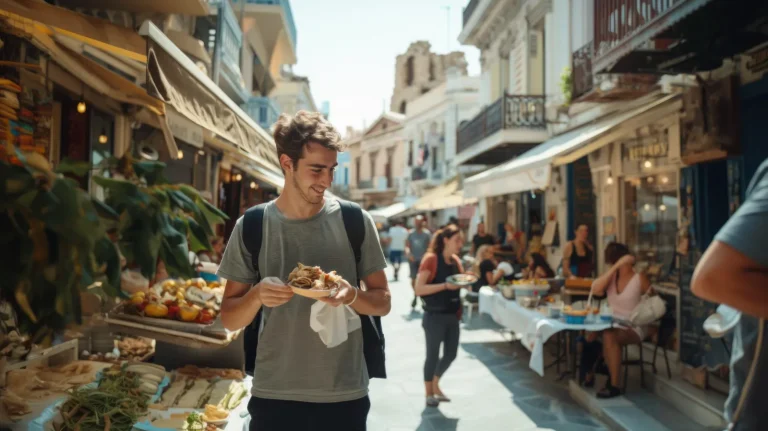
You may also like

Continue reading

Discover Ancient Wonders with the Appian Way Golf Cart Tour

Why the Appian Way Golf Cart Tour Is Rome’s Best-Kept Secret

Discover Ancient Wonders with the Appian Way Golf Cart Tour

June 30, 20255 min readGolf cart tours

Take a quiet ride through history. This isn’t your regular walk through ruins. This is a calm, open-air journey down one of the oldest roads in the world. With our Appian Way golf cart tour, you get close to the old stories, without sweating through the crowds or getting stuck in noisy streets. You just ride. Feel the breeze, hear birds, roll over the same stones Roman feet once touched. It’s slow, quiet, kind of unreal.

Why the Appian Way Is Perfect for a Rome Off the Beaten Path Tour

Rome’s full of amazing places, but let’s be honest: crowds, traffic, noise? Not always fun. That’s why the Appian Way tour feels like a quiet secret. It’s slow, open, and kind of magical.

Here’s what you’ll find out there:

  • No cars. No traffic lights. Just trees lining the path and soft wind through the grass.
  • Old stones under your wheels. The same road Roman soldiers used.
  • Open countryside where sheep still wander around like nothing’s changed.
  • Broken villas with ivy creeping over the walls.
  • Tombs stand alone, silent but proud.
  • Tiny churches hidden in corners, cool and quiet inside.

It doesn’t feel like the usual Rome. It feels older. Softer. Real. The kind of place where the past still hangs in the air and you don’t need a crowd to tell you it matters. And if you want to know more, follow the link and explore the Appian Way by golf cart tour.

Highlights of the Appian Way Golf Cart Tour

Forget long walks and sore feet. Our Appian Way golf cart tour takes you on a gentle ride through history. With a local guide who knows the stories behind the stones, you’ll see Rome in a way many visitors miss.

Ancient Rome Tour Through Time

This isn’t just a pretty road. It’s the same one Roman soldiers used 2,000 years ago. The stones are still there. So are the aqueducts that once brought water to the city. You’ll see the real thing—not a copy, not a model.

Your guide will stop at old villas, tombs, and quiet places that still carry the weight of time. It’s not rushed. You can get out, take a closer look, take photos, and ask questions. This is the heart of an ancient Rome tour—not just about buildings, but the people who lived, fought, and died here.

Catacombs Tour Rome Experience

You’ll also visit one of the oldest underground cemeteries in the city. Our catacombs Rome tour is more than just walking through tunnels. The air down there is quiet, a bit cold. Your guide talks about what the symbols mean, how the tunnels are set up, who was buried there, and why. This part of the catacombs tour in Rome hits different. It’s not creepy. It’s thoughtful. 

Scenic Stops and Hidden Gems

It’s not only about old ruins. This road is beautiful too. You ride through fields, see wildflowers, and feel the breeze. Trees line the path, and now and then, the cart stops—you look around, breathe, take it in.

Some spots have no signs, no ropes, nothing official. Just broken walls, open sky, and a feeling you can’t name. Other places are great for photos. No crowds, no noise. Just space. If you’re looking for an ancient Rome tour that feels real, not staged, this is it.

Why Choose a Golf Cart for Your Catacombs and Appian Way Tour

Walking under the sun can wear you out quickly. And some spots along the Appian Way tour are far from each other. That’s why a golf cart is the best way to explore here. It’s quiet, open, and smooth. You don’t need to be fit. You don’t need to worry about heat. You just sit back and enjoy the ride.

Comfort Meets Culture

You’ll see more in less time. While walking tours can be tiring, a golf cart catacombs tour in Rome helps you move from one site to another without getting worn out. The open sides let you feel the breeze. There’s shade above. You stay cool, even in the summer.

Your guide will tell stories as you ride, pointing out what others often miss. It’s an easy and fun way to learn.

Perfect for Families and Private Groups

Whether you’re traveling with kids, grandparents, or just want to enjoy a quiet time with friends, this tour fits everyone. The pace is easy. You can stop more, rest more, or stay longer somewhere if you like.

It’s hard to find a tour that works well for all ages. But this one does. It’s relaxed, flexible, and fun. A must if you’re looking for the best catacombs Rome tour.

Guest Testimonials: Why They Loved the Catacombs Rome Tour by Golf Cart

A lot of people say this was one of the best things they did in Rome. One family told us their kids were curious the whole way through, and their grandma kept up just fine. Someone else said it felt like stepping into another world: no crowds, just quiet roads and old stones.

Want to read more? Check out our Appian Way & catacombs by golf cart tour and see what benefits it offers.

Ready to Explore Ancient Rome the Relaxed Way?

Skip the crowds. Skip the stress. Take a quiet ancient Rome tour down the oldest road in Rome. Feel the history. Hear the stories. See things most people miss. Whether you want to explore underground tombs, take in wide green fields, or just enjoy time with family on a sunny day, this tour gives you all that—and more.

Book your unforgettable Appian Way golf cart tour today and get ready to see Ancient Rome like never before. From aqueducts to catacombs, this is the ancient Rome tour you’ll remember long after you’ve left.

Rolling Rome local guideWritten by the Rolling Rome team
Local guides sharing the stories of Rome since 2013.

Keep reading
You may also like

Continue reading